
Washington Court Records After Arrest
After a jail arrest in Washington, the first public trail often appears in two places. The booking agency creates the jail register entry, and the court system receives the filed criminal case if the prosecutor moves forward. Those records answer different questions. The jail record helps confirm whether a person is in custody, which agency booked the person, and whether a release, hold, or transfer is shown. The court record shows the charge filed with the court, the cause number, future hearing dates, warrants issued by the court, plea or trial events, and final disposition.
Washington law makes that distinction important. RCW 70.48.100 makes the jail register public and identifies basic register fields such as name, time and cause of confinement, and time and manner of discharge. The same statute also treats most records of a person confined in jail as confidential unless a specific release rule applies. That is why a Washington court records after a jail arrest search should not expect the jail roster to contain the full court file, medical details, juvenile details, or every booking document. For custody and booking status, start with Washington inmate records. For booking photos, use the separate Washington jail roster mugshots page.
The Washington Courts case search portal is the statewide starting point for criminal cases filed in municipal, district, superior, and appellate courts. The court that holds the case remains the record custodian for the complete court record.
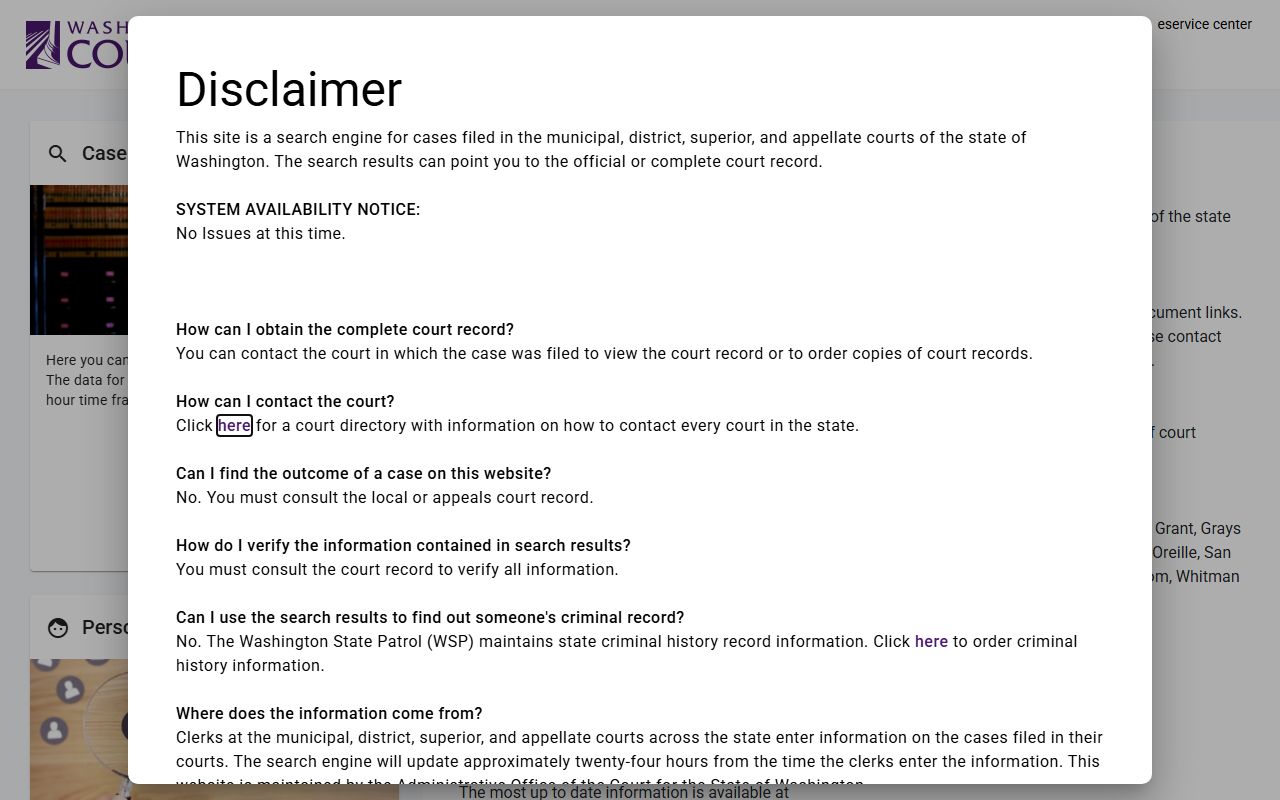
The statewide portal helps connect the arrest event to the filed case, but full records still come from the court where the case was filed.
Washington Trial Court Records
Washington criminal cases can appear in municipal, district, or superior court depending on the charge, the city or county involved, and the level of the offense. Municipal courts commonly handle city ordinance violations and many misdemeanors. District courts handle misdemeanors, gross misdemeanors, traffic criminal matters, and preliminary stages for some cases. Superior courts handle felony cases, juvenile matters, and appeals from courts of limited jurisdiction. A single arrest can touch more than one level if an initial appearance occurs in one court and the final charge is filed elsewhere.
The statewide Washington Courts search engine can search across municipal, district, superior, and appellate court indexes, but the official and complete record is held by the court where the case was filed. Washington Courts also states that its Name and Case Search information is updated every 24 hours at 3:00 a.m. That update schedule means a new jail arrest may appear on a county jail roster before the court case is visible in the statewide search. If a search fails soon after booking, check again after the prosecutor has had time to file the case.
Note: A jail roster entry can be current before a court case exists in the statewide court index.
Find Court Records After Arrest
A Washington court records after arrest search works best when the custody system and court system are checked in order. Begin with the county or city jail if the question is whether a person is in custody. Move to Washington Courts when the question is whether charges have been filed, what the charge status is, or when the next court date is set. If the person was sentenced to state prison after the case, the DOC Inmate Search becomes the better custody source.
- Open the Washington Courts search portal and select the search path that fits the available information.
- Search by defendant name, court name, or case number when known. Name spellings may differ from the jail booking name.
- Open the matching case and compare the charge list, court, filing date, and scheduled hearings with the jail roster entry.
- Request the complete court file from the court of record if the statewide index does not show the document needed.
For county routing, the Washington county directory points to each local inmate-population site. That matters because county pages can identify the local jail roster, local court routes, and any city or regional facility that may have booked the person before the case reached court.
Charges After Jail Arrest
The court record after an arrest usually begins with a charging document. The exact form depends on the offense and court. A complaint may start many lower-court criminal matters. An information is a prosecutor-filed charge used in many felony cases. An indictment is less common in day-to-day state case searches, but it is still a charging method when a grand jury charges an offense. The important point for a records search is that a booking allegation is not the same thing as the charge that appears in the court file.
| Document | Who Files It | What It Means in a Search |
|---|---|---|
| Complaint | Prosecutor or law enforcement process | Often starts a misdemeanor, gross misdemeanor, or preliminary criminal case. |
| Information | Prosecutor | Common felony charging paper filed after review of the arrest and evidence. |
| Indictment | Grand jury process | Formal charge that may appear in serious or special criminal matters. |
Washington court records after a jail arrest can also include probable-cause findings, no-contact orders, bench warrants, pretrial release conditions, arraignment entries, plea documents, sentencing orders, and appeal notices. Some details are visible in the public index. Other documents require a request to the court that owns the case record.
Washington Charge Status
Charge status changes as a case moves through court. A jail roster may show the arresting offense or a hold entered at booking, while the court record may later show a different filed charge. The prosecutor can amend a charge, add counts, reduce a charge through a plea, dismiss a count, or proceed to trial. A clean search compares the current court status with the custody record instead of treating the first booking line as the final case outcome.
| Status | Plain Meaning |
|---|---|
| Pending | The case or count remains active and has not reached final disposition. |
| Amended | The prosecutor or court record changed the charge, count, or cited offense. |
| Dismissed | The court no longer proceeds on that count, though other counts may remain. |
| Convicted | The record shows a guilty plea, verdict, or other conviction event. |
| Warrant | The court has issued a warrant, often tied to missed court or case conditions. |
The Washington Courts Name and Case Search source explains that case information is refreshed daily, which affects how quickly charge status changes become visible in a statewide search.
Daily updates make the court portal useful for tracking charge movement, but the court of record remains the final source for filed documents.
Release Conditions After Arrest
Release after a Washington jail arrest can involve bail, a personal-recognizance release, court-ordered conditions, a no-contact order, a probation or supervision hold, a warrant from another court, or a transfer to another agency. The details vary by court and county. The key records point is that release information may appear in both places: the jail roster may show custody status or bond fields, while the court file shows the judge's release order and later changes.
| Release Term | Where It Usually Appears | What to Check |
|---|---|---|
| Bail or bond amount | Jail roster and court order | Confirm the latest court order before relying on a roster snapshot. |
| Personal recognizance | Court record | Release can depend on signed promises and court conditions. |
| No-contact order | Court file | Conditions can continue after release from jail. |
| Detainer or hold | Jail roster and agency record | Another court, DOC, BOP, or ICE may affect release. |
For custody notifications after release or transfer, WA VINE through VINELink is the statewide notification route. WASPC states that WA VINE provides custody-status information and automated custody notifications, but it does not provide court or case information.
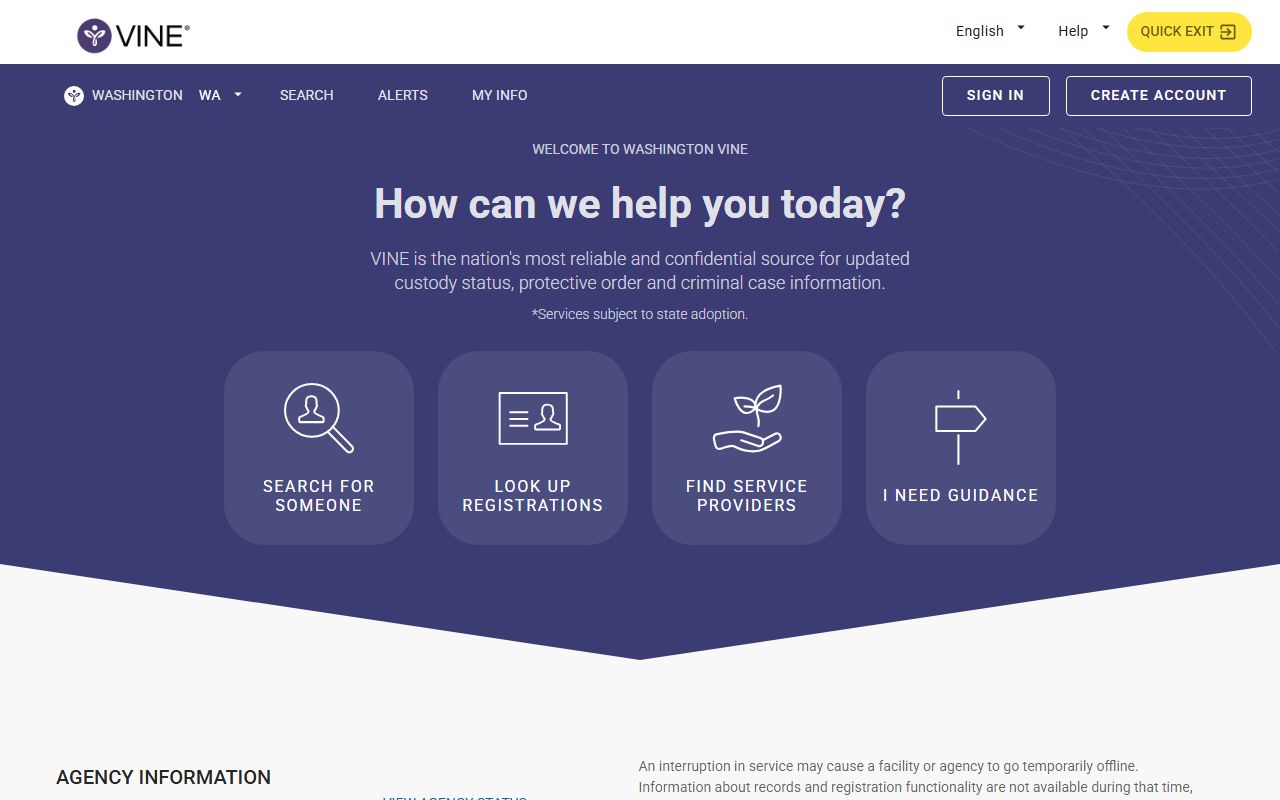
WA VINE supports release and transfer awareness, while Washington Courts remains the source for case events and filed charges.
Charges vs Convictions
An arrest and a filed charge are not a conviction. Washington court records after a jail arrest can show allegations, case activity, and final outcomes in the same case history. A defendant may be booked on one offense, charged with another, and convicted of a reduced count. A dismissed charge may still appear as part of the case history unless access is restricted by law or court order. Reading the status line matters as much as reading the charge name.
| Record Type | Meaning | Search Risk |
|---|---|---|
| Arrest | A custody event and booking by law enforcement. | May never become a filed criminal case. |
| Charge | An accusation filed or tracked in court. | Can be changed, dismissed, or resolved later. |
| Conviction | A guilty plea, verdict, or other final conviction event. | Needs the final disposition, not just the charge caption. |
This distinction also affects background screening. A public court lookup is not a consumer report and should not be used as a substitute for FCRA-compliant screening, employment review, tenant screening, credit decisions, or insurance decisions.
Sealed Washington Arrest Records
Some Washington court records after arrest are restricted from public view. Juvenile cases have different access rules. Sealed cases, certain dismissed matters, protection-order filings, victim information, medical details, and confidential law-enforcement material may be withheld or limited even when the basic case exists. A public court index may show less than the complete court file, and a jail roster will not provide confidential court documents.
| Access Term | Practical Meaning | Where to Verify |
|---|---|---|
| Public | Basic index or document can be inspected under normal access rules. | Washington Courts or the court of record. |
| Sealed | Public access is limited by court order or statute. | The court where the case was filed. |
| Confidential jail record | The jail register may be public, but full inmate records are restricted. | The jail records custodian under RCW 70.48.100. |
Washington's Public Records Act, chapter 42.56 RCW, controls many agency records requests, but court access follows judiciary rules and the court's own record processes. DOC records, jail records, and court records should be requested from the correct custodian.
After Sentencing or Transfer
A Washington court record can lead to a new custody system after sentencing or transfer. A person sentenced to state prison moves into the Washington State Department of Corrections system. DOC's Incarcerated Search uses DOC Number, first name, and last name. DOC states that the search gives selected public information such as name, DOC number, and current facility. That is different from a county booking number or a court cause number.
Federal and immigration cases use separate locators. The Federal Bureau of Prisons locator covers federal inmates from 1982 to present, including people tied to Federal Detention Center SeaTac. ICE's Online Detainee Locator System covers civil immigration detention, including people held at Northwest ICE Processing Center in Tacoma. Those searches do not replace Washington Courts for state criminal case filings.
The BOP locator source is the federal custody route when a Washington arrest or court case becomes a federal detention or prison matter.
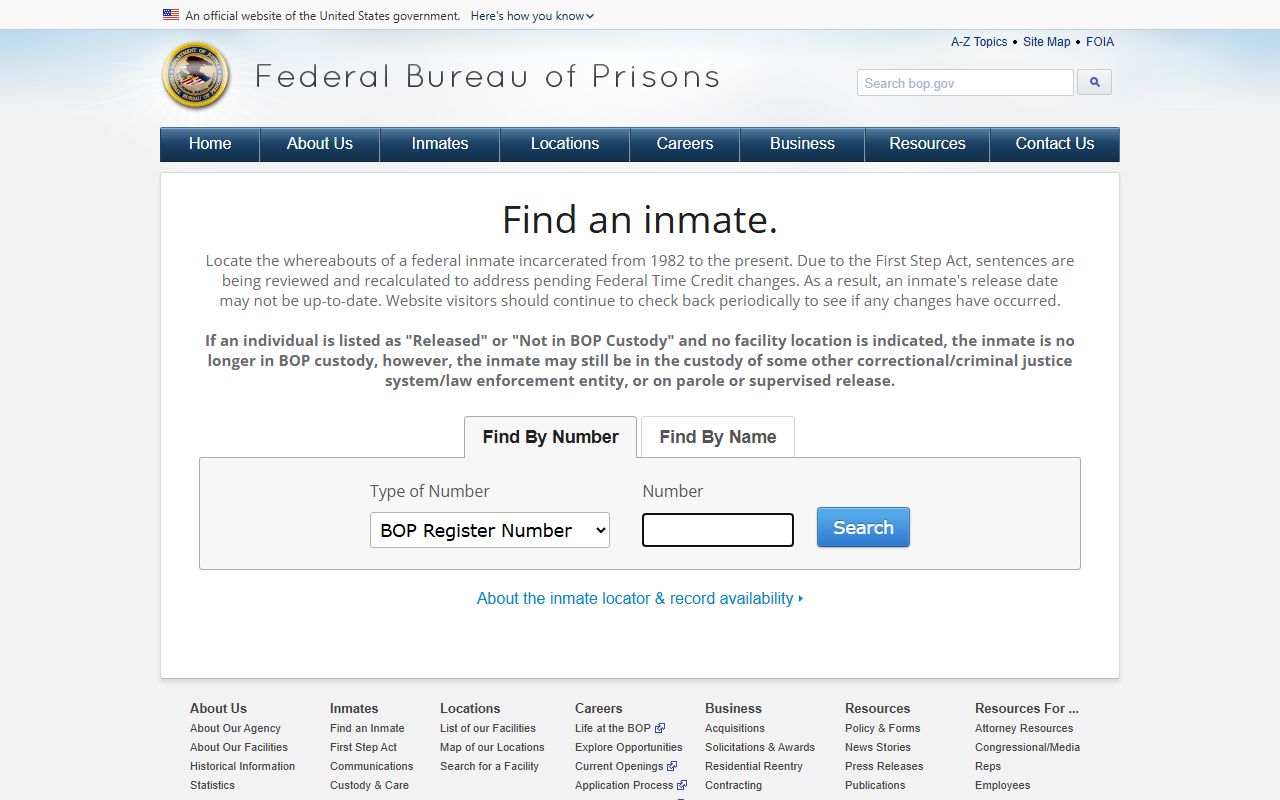
The federal locator is useful only after custody is federal, not while a person remains in a Washington city or county jail on local charges.
Requesting Complete Records
Complete Washington court records after a jail arrest usually come from the court of record. The statewide search portal can help identify the case, court, and cause number. The clerk or court records office can then explain document access, copy fees, sealed items, certified copies, and request methods. For jail booking records, ask the jail or local agency that created the booking. For DOC records, DOC says public records requests must be submitted in writing to the DOC Public Records Officer, and a Public Records Coordinator responds within five business days under the Public Records Act process.
DOC's records process is relevant only when the person is in DOC custody or the requested record is a DOC record. It is not the route for a county booking photo, municipal court docket, superior court judgment, BOP federal record, or ICE detention record. Correct routing prevents delays and avoids asking one agency for records it does not own.
The DOC public-records request source shows the state corrections request channel for DOC-held records.
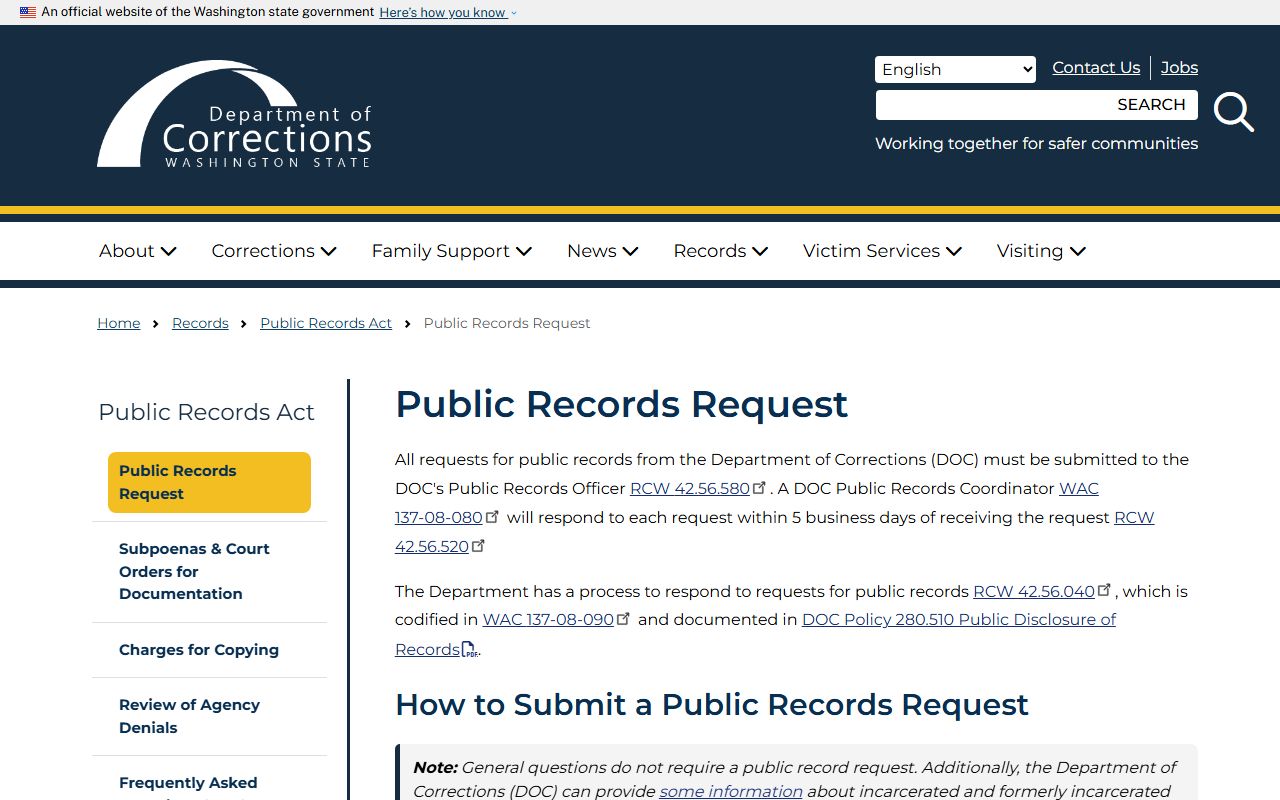
Use that DOC channel for corrections records, then use the court of record or local jail for court and booking records.
Restricted Court Records
Washington public access does not mean every record is open in full. Juvenile detention and juvenile court records need special care. Medical, mental-health, victim, investigative, and protected personal information can be withheld. Some jail information is restricted by RCW 70.48.100 even though the jail register is public. Some court documents may be sealed, redacted, or unavailable through the statewide index.
For accurate results, match the request to the record type. Use a jail roster for current custody, Washington Courts for case search, the court of record for complete filings, DOC Incarcerated Search for state prison custody, BOP for federal custody, ICE ODLS for immigration detention, and WA VINE for custody notification. That source-by-source approach gives the clearest view of court records after a jail arrest in Washington.
Important: Public court lookups may be incomplete or delayed; verify time-sensitive custody and court facts with the originating agency.